As we enter our 20th year at Roman Music Therapy Services (RMTS), we’re pausing to celebrate the communities we’ve had the privilege of growing alongside. To mark this milestone, we’re sharing stories that reflect the impact of music therapy with the people and agencies we serve.
More Than Just a Music Class
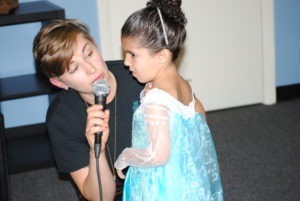
Hillary enrolled her now 5-year-old daughter, Ada, in Sprouting Melodies at Roman Music Therapy Services when she was just 1-year-old. Ada had always loved music, so it felt like a good fit. What she didn’t expect was how meaningful the experience would become for both of them. At first, Sprouting Melodies was a fun, weekly activity with songs, movement, and time spent together. But as Ada grew and her needs became more apparent, music therapy began to offer something more. “They knew how to adapt to my daughter’s needs,” Hillary explained. Since the sessions are led by music therapists, they were able to adapt activities to meet her daughter where she was at, while still supporting her growth.
A Supportive Community
One of the most meaningful aspects of Sprouting Melodies was the diversity within the group itself. Children of all abilities participated side-by-side with one another, engaging in their own way, each supported in a way that felt natural to them. “We thought it was really special that
she was able to do the class with kids of all different abilities,” Hillary said. “She and I both made friends in those classes who we still see now, a few years later.”
In that shared space, differences were not barriers, rather they were part of the experience. For Ada, it meant being included. For Hillary, it meant feeling understood. For both of them, it meant building a community that would last beyond the music session.
Beyond the Session
Like many families who join Sprouting Melodies, music continued beyond the session, within the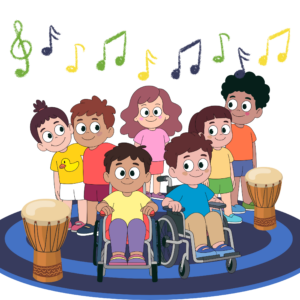 home. “We sing a lot of the Sprouting Melodies songs at home to this day” Hillary said. Those songs became part of their daily routines, woven into playtime, transitions, and quiet moments alike. And now, with the arrival of their second child, the music continues. “We also sing them with him,” Hillary shared. “I’ll be enrolling him in Sprouting Melodies soon.” For them, music therapy has become something that grows with their family, from one child to the next, from one stage of life to another.
Similarly, the connection to Roman Music Therapy Services didn’t end when Sprouting Melodies was over. When the opportunity arose to join Roman Music Therapy Services in a new way, Hillary jumped at the opportunity. “When Roman Music Therapy was looking for someone to work at the front desk on Saturdays, I was very excited to join,” she said. “I wanted to be a part of the organization that had made us feel so welcomed, so I could welcome other families in turn.” From 2025-2026, Hillary worked at the front desk, playing a role in creating the same first impression that meant so much to her – greeting families as they walk through the door, many of them just beginning their own journeys.
20 Years of Building Community Through Music
Through programs like Sprouting Melodies, Roman Music Therapy Services has helped families not only support their children’s development, but also find a connection with music, with therapists, and with each other. For Hillary and Ada, it started with a love for music that grew into friendships that have lasted for years. Because sometimes, the most powerful part of music therapy isn’t just the music. It’s the feeling of belonging that stays with you long after the last song.
 Finding Inspiration in the People We Serve
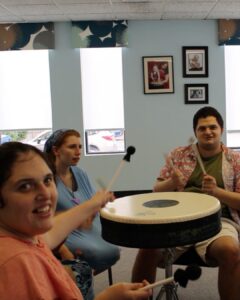
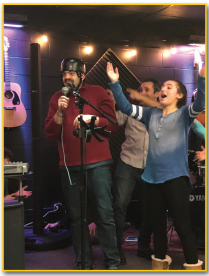
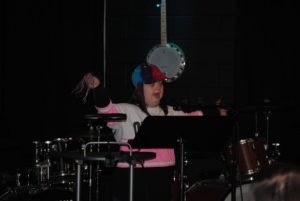 l as a weekly chorus. The karaoke nights are full of fun, energetic music makers and audience members, cheering each other on and crooning to a favorite song. We have had parents and families, friends looking for something to do on a night out, adults with disabilities and young children participate.
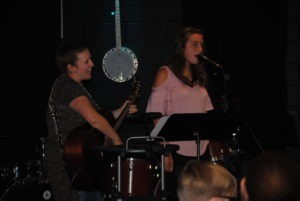 Two weeks before the event and we realized we were offering something that the community was getting excited about! Social media started lighting up with groups and individuals tagging each other and referencing the karaoke post on Facebook. Registrations started pouring in online. Group homes started calling with residents RSVP’s. The week of the event we had ninety people registered for a room at