20th Anniversary Stories: Roman Music Therapy Services and The Community Group

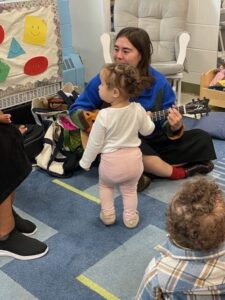
As we enter our 20th year at Roman Music Therapy Services (RMTS), we’re pausing to celebrate the communities we’ve had the privilege of growing alongside. To mark this milestone, we’re sharing stories that reflect the real, human impact of music therapy across Massachusetts. One of the organizations we are proud to work with is The Community Group, a childcare organization in Lawrence, MA.  

Joy, Curiosity, and a Little Bit of Peace

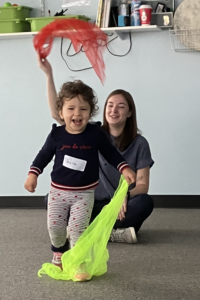
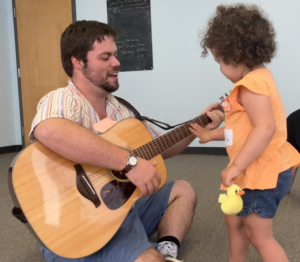
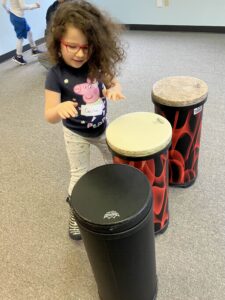
Staff members at The Community Group consistently speak about the happiness music therapy brings into their centersKathleen McDonoughthe Manager of Community Building and Employee Relations at The Community Group, describes it this way: There is such a level of enjoyment, joy, and curiosity.” Students quickly recognize their therapists the moment they enter the classroom, greeting them with visible excitement. That joy, she notes, naturally leads to increased participation and meaningful skill building.

Katherine Averill, Director of Curriculum and Coaching, captures something quieter underneath the energy, expressing that, “There is such a peacefulness in the joy that I think we were all seeking.” Together, staff describe sessions that are not only energetic and engaging but also grounding and calm. 

Relationships Built Quicky, Felt Deeply 

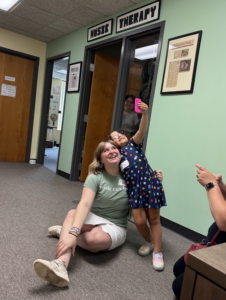
Beyond joy, The Community Group has been deeply impressed by how quickly the RMTS clinicians build genuine relationships with the children they serve.  Kathleen noted, [The clinicians] are seeing so many children over the two weeks, and they know their names.”  

Staff also speak to the team’s commitment to bilingual engagement. Even clinicians who are not fluent in Spanish make intentional efforts to learn songs and interventions in Spanish, ensuring children feel seen, heard, and included. Katherine adds that the connection extends beyond clinician and child – as Katherine put it, the clinicians are supporting engagement between the children… they are all engaged together.” Music becomes a shared experience that strengthens peer relationships and builds classroom community. 

Growth That Stays in the Room

The impact of music therapy at The Community Group goes far beyond the session itself. Staff observe meaningful growth in classroom skills such as listening, turn-taking, sharing, and overall confidence. Kathleen also shared how meaningful it is to watch children develop a genuine love of music. As Katherine put it, “They are already beginning to see themselves as musical.”

Teachers and students look forward to each session, often wishing they could have music therapy more often. Staff describe it as a true community-building experience, one that transforms not only student engagement but the overall classroom dynamic. 

What They’d Tell Another Organization

When asked what they would say to another organization considering a partnership with RMTS, staff at The Community Group responded simplyYou will not be disappointed.”  

As Janet Moro, Senior Director of Quality and Operations, shared, “Right from the start we wanted a hands-on approach, and that’s exactly what we’re getting.” Katherine Averill added that she thinks music brings aexuberance and playfulness that can sometimes get lost in busy childcare settings 

At Roman Music Therapy Services, we deeply value our partnership with The Community Group. We are proud to serve our community and create meaningful impacts through music.  


20th Anniversary Stories: From the Pandemic to Now: The Power of Community

As we enter our 20th year at Roman Music Therapy Services (RMTS), we’re pausing to celebrate the communities we’ve had the privilege of growing alongside. To mark this milestone, we’re sharing stories that reflect the real, human impact of music therapy across Massachusetts.

Cecilia’s & Kristina’s Story

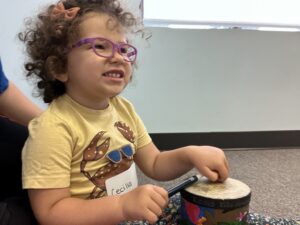
When Cecilia was born in December 2020, the world looked very different. Like many families welcoming a baby during the COVID-19 pandemic, Cecilia’s early months were quiet and isolating – staying home, being cautious, and, for Kristina, navigating what it meant to raise her first newborn during a time of such uncertainty. But even in that isolation, there was one thing Kristina knew she wanted to bring into Cecilia’s life from the very beginning: music.

As a musician herself, music has always been a central part of Kristina’s identity. She understood not only the joy music can bring, but also its deeper impact. “I knew that at an early age, music can be really transformative,” Kristina said. The challenge for her was figuring out how to introduce that experience in a world that had shutdown.

Discovering Music & Community

That’s when she kept seeing the same, familiar name come up: Roman Music Therapy Services. She had previously seen the impact of Roman Music Therapy Servies through a family friend whose son had participated in different programs. “It brought him so much

 joy,” Kristina recalled. So when I saw the name again, it was kind of a no-brainer.” Soon after, Cecilia was enrolled in her very first Sprouting Melodies class.

Cecilia’s first music therapy session looked a little different than what our families may see today. Masks were still required, and precautions were still high. The world was still adjusting back to a new normal. But even within those limitations, something meaningful began to take shape. Their first music therapist, KT, made a lasting impression. “They were such a bright light,” Kristina said. Despite the physical barriers at the time, the sessions created space for connection through rhythm, movement, and shared musical experiences.

A Saturday Morning Ritual

Over time, Sprouting Melodies became a cornerstone of Cecilia’s early childhood. Week after week, Kristina and Cecilia returned, eventually continuing all the way until Cecilia turned five. What stood out to

 them wasn’t just the music, but the consistency, they joy, and the sense of belonging. “It became my safe space on Saturday mornings,” Kristina shared.

Each class followed a familiar rhythm: sitting together in a circle, singing, moving, and engaging with other families. But just as important were the moments after the class ended. Families stayed. Children played. Parents talked. “It helped me to bond with other families,” Kristina said. “We would sit and chat while the kids played. It became something I really looked forward to.” In a time when connection felt limited, those small, consistent gatherings became deeply meaningful.

More Than Music

Through Sprouting Melodies, Cecilia wasn’t just being introduced to music. She was building relationships, exploring her environment, and growing alongside her peers. And for Kristina, the experience extended beyond Cecilia’s development. It was about community, shared understanding, and finding other parents navigating similar stages of life during an unprecedented time. The connections formed in those classes didn’t end when the sessions did. Many of the families stayed in touch, turning weekly music therapy sessions into lasting friendships. What began as simple music became something so much bigger: a support system.

The Lasting Impact of Music Therapy

As Cecilia grew, so did her journey. By the time she turned five, she had aged out of the Sprouting Melodies program, a natural transition but not an easy one. “I sort of miss it,” Kristina expressed. That feeling speaks to something deeper than just enjoying an activity. It reflects the role the program played during a formative time, not only in Cecilia’s life, but in Kristina as a parent. Sprouting Melodies wasn’t just a class they attended, but it was a place they belonged. 

Cecilia’s story is a reminder that music therapy doesn’t just support development. It creates spaces where connection can thrive. In early childhood, that might look like learning through rhythm and song. For parents, it might mean finding community, support, and shared joy. For families navigating uncertain or isolating times, it can mean everything. As Kristina reflects on their experience, what stands out the most isn’t just the music itself, but rather what it made possible. “It was something we could look forward to every week,” she said. “It gave us connection during a time when that was really hard to find.” 

As Roman Music Therapy Services celebrates 20 years of service, Cecilia’s story highlights the many ways music therapy reaches beyond the session itself. Over the past two decades, Roman Music Therapy Services has created spaces where individuals and families can come together, whether in moments of transition, growth, or uncertainty. For Cecilia and Kristina, that space was found a in a music circle on Saturday mornings. A place where music sparked connection. Where community took root. And where, even during the most isolating times, joy could still be shared. Sometimes the impact of music therapy isn’t just the music. It’s in the relationships, the routines, and the sense of belonging that stay with families long after the final song ends.


20th Anniversary Stories: Bridging the Gap: Transitioning to Adulthood Through Music

Bridging the Gap: Transitioning to Adulthood Through Music

As we enter our 20th year at Roman Music Therapy Services (RMTS), we’re pausing to celebrate the communities we’ve had the privilege of growing alongside. To mark this milestone, we’re sharing stories that reflect the real, human impact of music therapy across Massachusetts. 

Sophia’s Music Therapy Journey 

“Romp Bomp A Chomp, Romp Bomp A ChompRomp Bomp A Chomp,” Sophia sings as she enters the room for Young Adult Music Therapy Group. One of Sophia’s favorite artists is The Wiggles, and she looks forward to hearing this song every week with her providersCollin and Sam.

Sophia initially began receiving virtual music therapy services as a teenagerbut she and her family desired something in person that would allow her to engage more fully with others through music. That search eventually led them to Roman Music Therapy Services. Sophia now attends Young Adult Group with her peers from her group home, with music therapy being something she looks forward to each week.

Supporting Through Transitions 

Like many individuals with disabilities, turning 22 meant losing access to several support services that had been a part of her life and routine. Sophia’s momLinda, described the experience simply: “it’s like falling off a cliff.” For many families, this transition can feel daunting and overwhelming as they search for meaningful activities and supports in adulthood from therapies to day programs. Linda expressed, “Roman Music Therapy Services has been very important in filling those gaps,” adding, “it’s provided my daughter and her peers with a lot of stimulation, fun, and learning.

For Sophia, music therapy is also an important way to communicate and express herself. Sophia is nonverbal and uses an augmentative and alternative communication (AAC) device. Linda remarked, “one of the things that I’ve really appreciated about the music therapists are that they have encouraged Sophia to bring her communication device.” Together with Sophia’s therapists and group home staff, they created a music therapy page within her device. This page allows Sophia to actively participate during sessions by including commonly used phrases and choices, such as how she is feeling, movements and instruments, and song choices. The collaboration between Sophia’s therapists and support staff helped to ensure that Sophia could fully engage in the group in a way that was authentic and meaningful to her. “It shows they’re really interested in individualizing her experience,” Linda said. “Even though it’s a group class, they’re still thinking about what will make it special for her.” 

Sophia’s love of music is evident in the sounds and phrases she shares. “They’ve totally gotten on board with the kinds of music Sophia likes,” Linda shared. The music therapists embrace her musical interests and incorporate them into sessions. By meeting Sophia where she is at musically, the music therapists create opportunities for connection, engagement, and joy

Impact Beyond the Session

Over time, Linda has noticed that the impact of music therapy extends far beyond the weekly sessions. Sophia often brings pieces of the experience home with her, including tapping her legs rhythmicallyAt first, Linda wasn’t sure what Sophia was communicating, but then one evening Linda attended a session and saw the group begin with the same leg-tapping activity. “That’s when I realized that’s what she was trying to tell me. She was thinking about music therapy, Linda said. Moments like this show how meaningful music therapy has become for Sophia and how it continues to stay with her long after the session ends. 

For Linda, knowing that Sophia has this experience brings tremendous peace of mind. As Sophia grows into adulthood and spends more time in her group home community, it matters deeply to Linda that others get to experience the joyful, expressive parts of her personality. “It gives me comfort knowing she has this experience with other people,” Linda shared. “I want her to have a whole world.” Music therapy has become a part of her world. A place where Sophia can connect with peers, explore music she loves, and express herself in ways that feel natural and joyful.

As Roman Music Therapy Services celebrates 20 years of serving the community, stories like Sophia’s highlight the last impact music can have across the lifespan. From childhood through adulthood, music therapy creates opportunities for connection, communication, and shared joy. For Sophia and her family, those opportunities have made all the difference. Through every rhythm, vocalization, and familiar lyric, Sophia continues to find her voice in the music, one “Romp Bomp A Chomp” at a time. 

20th Anniversary Stories: Roman Music Therapy Services and the Lawrence School District 

As we enter our 20th year at Roman Music Therapy Services (RMTS), we are reflecting on the partnerships that have shaped our work across the Massachusetts community. To mark this milestone, we’re sharing stories that reflect the impact of music therapy within the communities we serve. 

Eight Years in Lawrence 

Roman Music Therapy Services has partnered with Lawrence Public Schools since 2017. What began as a commitment to bring music therapy to students in Lawrence has grown into one of our most meaningful and enduring collaborations. For the 2025-2026 school year, RMTS provided services to over 1,200 students every week across the district. 

In January 2026, we conducted a survey to better understand what this work has meant to the people closest to it: the teachers, staff, and students who experience it every week. 

“Music Day is THE BEST Day” 

Reflecting on their experiences with music therapy, 97% of Lawrence School District staff reported being satisfied or very satisfied with RMTS services. But the numbers only tell part of the story. 

When we asked staff to describe the impact of music therapy in their own words, the responses were full of warmth and specificity, reminding us why this work matters. 

“Music Day is THE BEST day here at [our school]. Our music therapist[s] are prepared, joyful, and know each and every child. We ALL look forward to music.” –  Pre-K Staff Member, Lawrence Public Schools 

One Pre-K team summed up the spirit of their school’s music therapy experience in just three words: “School wide JOY.” It’s hard to imagine a better measure of success. 

What Teachers Are Seeing in Their Students 

Beyond the enthusiasm, teachers shared something even more meaningful: tangible changes in their students. Behavioral improvements, increased engagement, and new emotional skills were among the most commonly noted shifts. 

“The students are happy and able to take turns during the group time. This group provides them opportunities to appropriately take turns and also helps with expressing their emotions through music.” – Kindergarten Teacher, Lawrence Public Schools 

Teachers also described students who rarely engage in other parts of the school day becoming visibly present and participatory during music therapy sessions. For children who sometimes struggle to find their footing in a traditional classroom setting, music offers a different kind of entry point – and RMTS clinicians meet them there. 

Staff were particularly appreciative of the care and creativity RMTS clinicians bring to each intervention. Knowing each child by name, arriving prepared, and designing sessions around the real needs of each classroom – these are the details that build trust over time. 

Joy That Travels Beyond the Session 

Perhaps one of the most telling observations came from an elementary school staff member who noticed something simple and beautiful: 

“Our students LOVE music and share that joy throughout the day after each visit.” – Elementary School Staff Member, Lawrence Public Schools 

That’s the kind of ripple effect we hope for: music therapy that doesn’t stay contained in the session room, but moves through the school day, into conversations and interactions, into the way kids carry themselves when the music has ended. 

Twenty Years of This Work 

As RMTS marks 20 years of service, we are grateful for every community that has trusted us with this work, including the students and staff of the Lawrence Public School District. This partnership reflects what we believe music therapy can be at its best: consistent, creative, relational, and genuinely transformative for the people it serves. 

We look forward to many more years of music, growth, and “school wide JOY.”